
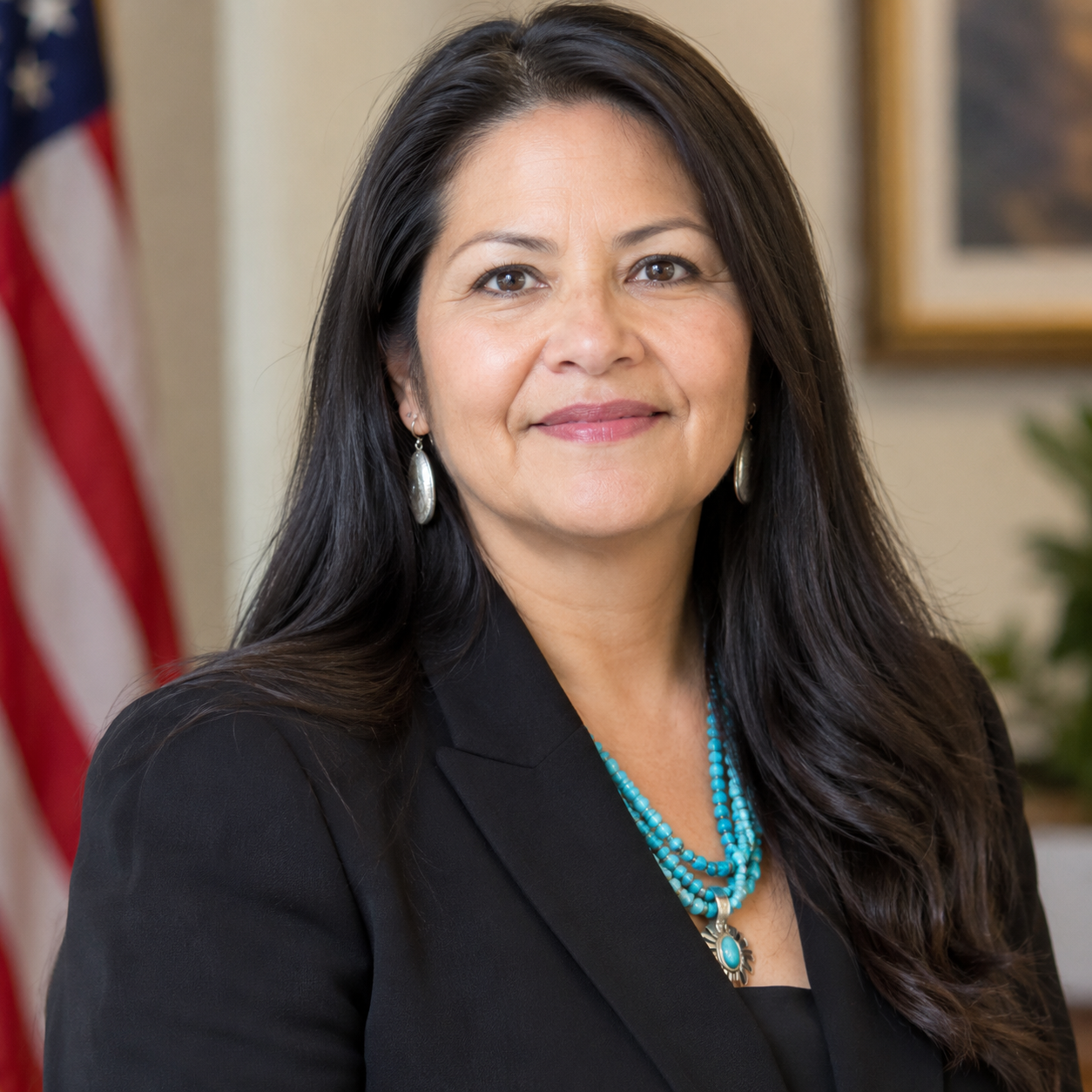
Introduction for Shelly Lowe
Shelly Lowe is a respected American academic administrator and cultural leader whose career has focused on higher education, Native American student success, and the preservation of cultural heritage. As a citizen of the Navajo Nation, she has brought valuable experience and a strong commitment to educational opportunity to some of the most important institutions in the United States.
Shelly C. Lowe made history when she became the first Native American to lead the National Endowment for the Humanities (NEH), a federal agency that supports research, education, and public understanding of history and culture. She served as the agency’s chair from February 2022 until March 2025. Her appointment represented a significant milestone for Indigenous representation in national cultural leadership.
Her professional journey also includes leadership positions at the University of Arizona, Yale University, and Harvard University. Through these roles, she helped support Native American students and promote greater awareness of Indigenous histories and traditions.
This article explores seven important facts about Shelly Lowe, including her background, education, professional achievements, leadership approach, and influence on American cultural institutions.
Comprehensive Article Outline
| Heading | Topic | Main Focus |
|---|---|---|
| H1 | Shelly Lowe: 7 Inspiring Facts | Biography and achievements |
| H2 | Early Life and Background | Family, community, and heritage |
| H2 | Education and Academic Journey | University studies and scholarships |
| H2 | Career in Higher Education | Arizona, Yale, and Harvard |
| H2 | Historic Leadership at the NEH | Appointment and national significance |
| H2 | Indigenous Heritage and Representation | Cultural identity and inclusion |
| H2 | Contributions to Humanities and Education | Research, access, and preservation |
| H2 | Leadership Style and Legacy | Lessons and long-term influence |
| H2 | Frequently Asked Questions | Six common questions |
| H2 | Conclusion | Summary of her achievements |
1. Shelly Lowe’s Early Life and Navajo Nation Background
Shelly Lowe grew up in Ganado, Arizona, on the Navajo Reservation. Her upbringing in a close-knit Indigenous community helped shape her understanding of culture, education, and the importance of preserving community history.
The Navajo Nation, also known as Diné Bikéyah, has a rich cultural heritage, including traditional knowledge, language, art, community relationships, and stories passed from one generation to another. Growing up within this environment gave Lowe a personal connection to the experiences and perspectives of Native American communities.
Her background later became an important part of her professional work. Rather than viewing education only as a path to individual success, Lowe’s career has reflected the value of helping students and communities maintain connections to their identities while pursuing opportunities in higher education.
Growing Up in Ganado, Arizona
Ganado is a community in northeastern Arizona associated with the Navajo Nation. Lowe’s early experiences there offered a perspective that would later inform her work at major American universities.
Moving from a rural community to a large university can present challenges for students who are unfamiliar with the surrounding environment or who find that their cultural experiences are not well understood. Lowe’s own educational journey helped her recognize the importance of support systems, mentorship, and inclusive campus communities.
These issues remain relevant to colleges and universities today. Students may need more than academic instruction to thrive. They can also benefit from cultural centers, knowledgeable advisers, financial assistance, and opportunities to connect with peers who share similar experiences.
The Importance of Cultural Identity
For Lowe, her Navajo Nation identity is an important part of her background and public leadership. Indigenous representation in higher education can help institutions better understand the needs and perspectives of Native students.
Cultural identity also matters beyond the classroom. Language, historical memory, and community traditions help people understand their place in the world. Preserving these traditions can strengthen relationships between generations and support a more complete understanding of American history.
Lowe’s career illustrates how personal experience can inform professional service without limiting a person’s ambitions. Her path from Ganado to national leadership demonstrates that local roots and a broader public mission can complement one another.
2. Shelly Lowe’s Education and Academic Journey
Education played a central role in Shelly Lowe’s professional development. She attended the University of Arizona, where she earned a Bachelor of Arts degree in sociology and a Master of Arts degree in American Indian Studies. She also completed doctoral coursework in higher education.
Her academic interests connected social institutions with the experiences of Indigenous communities. Sociology examines how people interact with organizations, communities, and broader social systems. American Indian Studies provides an opportunity to explore Indigenous histories, cultures, identities, and contemporary issues.
Together, these fields offered a foundation for understanding the relationship between education and cultural representation.
The Value of a Broad Academic Foundation
A degree in sociology can help students examine questions such as:
-
How do communities influence individual opportunities?
-
What barriers can prevent people from accessing education?
-
How do institutions respond to social and cultural differences?
-
What makes educational programs effective for different populations?
American Indian Studies adds a more focused understanding of Native American histories, perspectives, and contemporary experiences.
This combination is relevant to educational leadership because universities serve students with different backgrounds, goals, and support needs. Leaders who understand these differences are better equipped to develop programs that respond to real challenges.
Recognition Through the Flinn Scholars Program
Lowe was a Flinn Scholar, receiving a scholarship that supported her undergraduate education at the University of Arizona. The Flinn Foundation has highlighted her journey as an example of the role educational opportunities and mentorship can play in professional development.
Scholarships can reduce financial barriers, but their benefits may extend further. They can connect students with mentors, academic networks, and opportunities to develop leadership skills.
For students from rural or underserved communities, these forms of support can be particularly important. Access to strong educational resources may help them explore careers that once seemed distant or difficult to reach.
From Student to Educational Leader
Lowe’s academic background eventually supported a career focused on student services, Indigenous education, and institutional leadership.
Her path shows that higher education can provide more than specialized knowledge. It can also develop the skills needed to manage organizations, build partnerships, understand policy, and support people with different experiences.
Her career is a useful example for students who want to combine academic learning with public service. Choosing a field of study that connects personal interests with practical challenges can create opportunities to make a meaningful contribution.
3. Shelly Lowe’s Career in Higher Education
Shelly Lowe built her professional reputation through a series of leadership positions at respected American universities. Her work focused on supporting Native American students, strengthening educational programs, and helping institutions understand the importance of Indigenous cultures.
Her career demonstrates that educational leadership involves more than classroom teaching. University administrators help develop student services, manage academic programs, build relationships with communities, and create environments where students can succeed.
Working at the University of Arizona
Lowe spent six years working as the Graduate Education Program Facilitator for the American Indian Studies programs at the University of Arizona. In this role, she gained experience supporting academic initiatives and addressing issues related to Native American education.
Her connection to the university extended beyond her professional responsibilities. As an alumna, she understood the opportunities that higher education could create and the challenges that students might encounter while adjusting to university life.
Her experience also helped her develop a strong understanding of the relationship between academic institutions and Indigenous communities.
Leadership at Yale University
Lowe later served as an assistant dean in the Yale College Dean’s Office and director of the Native American Cultural Center at Yale University. These positions allowed her to contribute to student support and cultural programming within a major research university.
Cultural centers can provide students with spaces to build relationships, celebrate traditions, discuss shared experiences, and receive guidance. They can also help the wider university community learn about cultures that may not receive enough attention in standard academic programs.
Lowe’s work at Yale formed part of her broader commitment to ensuring that Native American students had access to supportive educational environments.
Directing the Harvard University Native American Program
In 2009, Lowe became executive director of the Harvard University Native American Program. The program supports Indigenous communities and promotes awareness of Native American cultures within the university environment.
This position gave Lowe an opportunity to work at the intersection of education, cultural representation, and institutional leadership.
Her responsibilities involved supporting a program that connected students, faculty, and broader communities. Such work is valuable because universities are not simply places where people earn degrees. They are also institutions that influence public knowledge, professional opportunities, and cultural understanding.
Career Milestones at a Glance
| Institution | Position or contribution |
|---|---|
| University of Arizona | Graduate Education Program Facilitator for American Indian Studies |
| Yale University | Assistant dean and director of the Native American Cultural Center |
| Harvard University | Executive director of the Harvard University Native American Program |
| National Council on the Humanities | Member of the federal advisory council |
| National Endowment for the Humanities | Chair from February 2022 to March 2025 |
These roles show how Lowe developed experience across different institutional settings. Each position offered opportunities to address educational challenges and promote the value of Indigenous perspectives.
4. Shelly Lowe’s Historic Leadership at the National Endowment for the Humanities
One of the most important achievements in Shelly Lowe’s career was becoming chair of the National Endowment for the Humanities.
President Joe Biden nominated Lowe for the position in October 2021, and the United States Senate confirmed her nomination in February 2022. She began her tenure as chair in February 2022. She was the first Native American to lead the federal cultural agency.
Her appointment was significant because it brought Indigenous representation to the leadership of an institution responsible for supporting research, education, and public engagement with the humanities.
Understanding the National Endowment for the Humanities
The National Endowment for the Humanities, commonly called the NEH, is an independent federal agency established in 1965.
It supports projects that help people explore history, literature, philosophy, languages, cultural traditions, and other areas of the humanities. Its funding has supported educational institutions, libraries, museums, researchers, and cultural organizations.
The humanities help people examine how societies develop and how individuals understand their experiences. They also encourage thoughtful discussion about difficult historical events, social change, and the values that shape communities.
Readers can learn more about the agency’s mission and programs through the official National Endowment for the Humanities website.
Why Her Appointment Was Important
Lowe’s appointment represented a milestone in the history of federal cultural leadership. As a citizen of the Navajo Nation, she brought personal and professional experience relevant to the preservation and presentation of Indigenous histories.
Representation matters because leadership influences which questions receive attention, how programs are designed, and which communities are invited to participate.
However, representation alone does not guarantee successful outcomes. Institutions also need effective policies, responsible funding decisions, strong partnerships, and clear goals.
Lowe’s experience in higher education provided a foundation for understanding these responsibilities. Her work had involved students, academic programs, and cultural initiatives long before she assumed the national position.
Expanding Access to the Humanities
During her tenure, Lowe emphasized the importance of making humanities resources available to people across the United States.
Access can vary considerably between communities. A large university may have extensive research facilities, archives, and cultural programs, while a small rural community may have fewer local resources.
Federal grants and partnerships can help reduce these differences by supporting public programs, historical research, exhibitions, and educational projects.
Lowe’s leadership highlighted the idea that the humanities should not be limited to major cities or elite academic institutions. People in rural communities, tribal nations, public schools, and local museums also have valuable histories and perspectives to contribute.
The End of Her Tenure
Lowe served as NEH chair from February 14, 2022, until March 2025. Her departure marked the end of a historic period in the agency’s leadership.
Her tenure remains an important part of her professional biography because it connected her longstanding work in education and Indigenous cultural representation with a national public institution.
5. Shelly Lowe’s Indigenous Heritage and Commitment to Representation
Shelly Lowe’s Navajo Nation background is central to understanding her professional journey. Her career demonstrates how Indigenous knowledge and experiences can contribute to education, research, and public cultural institutions.
Indigenous communities have distinct histories, languages, traditions, and forms of knowledge. Yet these experiences have not always received adequate attention in mainstream educational settings.
Improving representation requires more than adding a small amount of information to existing curricula. It involves listening to communities, supporting Indigenous researchers, protecting cultural knowledge, and recognizing Native Americans as active participants in contemporary society.
Preserving Cultural Knowledge
Cultural preservation can take many forms, including:
-
Recording oral histories with community permission.
-
Supporting the teaching and learning of Indigenous languages.
-
Preserving historical documents and photographs.
-
Creating museum exhibitions in partnership with Indigenous communities.
-
Supporting research led by Native American scholars.
-
Teaching Indigenous histories in accurate and respectful ways.
These activities help protect important records and make them available to future generations.
At the same time, cultural preservation requires care. Not every tradition or story is intended for public distribution. Responsible projects respect community authority, privacy, cultural protocols, and the wishes of the people whose knowledge is being documented.
The Role of Universities in Indigenous Representation
Universities have an important responsibility to present history accurately and provide students with opportunities to understand different perspectives.
Native American cultural centers, Indigenous studies programs, student organizations, and community partnerships can help create stronger connections between universities and tribal communities.
These initiatives can benefit Indigenous students while also helping other students develop a more complete understanding of American history.
Lowe’s professional experience at Arizona, Yale, and Harvard placed her within institutions where these issues could be addressed through education and student support.
Why Representation Matters Beyond Academia
Cultural representation is relevant in museums, libraries, government agencies, public history projects, and local communities.
When more perspectives are included in historical research, the public can gain a broader understanding of events and experiences that shaped the country.
Representation can also challenge stereotypes by presenting Indigenous communities as diverse, dynamic, and contemporary rather than treating them only as subjects of the distant past.
Lowe’s career offers an example of how Indigenous leadership can contribute to these broader discussions.
6. Shelly Lowe’s Contributions to Humanities and Education
Shelly Lowe’s professional work connects two important areas: educational opportunity and cultural understanding.
Education helps people gain knowledge and develop skills. The humanities encourage them to consider how history, language, literature, philosophy, and cultural traditions influence society.
Together, these fields can help communities understand the past, discuss present challenges, and make more informed decisions about the future.
Supporting Native American Students
One of the consistent themes in Lowe’s career has been support for Native American students in higher education.
Students may face challenges involving financial resources, geographic distance, unfamiliar academic systems, or a lack of culturally informed support services.
Universities can respond through mentoring, academic advising, scholarships, community partnerships, and culturally relevant programs.
Effective support should recognize that Native American students do not all share the same experiences or needs. Tribal communities have different histories, and individual students have different goals.
Programs are most effective when institutions work with students and communities rather than making assumptions about what support they require.
Supporting Historical Research and Public Education
The NEH supports humanities projects that make research and cultural knowledge available to the public. Such projects can include historical archives, documentary films, public lectures, museum exhibitions, and educational resources.
During Lowe’s leadership, an area of particular importance was the Federal Indian Boarding School Initiative.
The initiative seeks to investigate the history and lasting consequences of federal Indian boarding schools, which were part of a system that separated many Indigenous children from their families and communities.
The NEH committed funding to help digitize records and support oral history work related to Indian boarding schools. These efforts can help researchers and communities access historical evidence and preserve the experiences of people affected by the system.
This work illustrates why historical documentation matters. Records and oral histories can help communities understand what happened, preserve individual experiences, and support future research.
Encouraging Public Engagement
Humanities projects are most valuable when people can engage with them meaningfully.
A museum exhibition, for example, can make historical research accessible to visitors who may never read an academic book. A digital archive can allow students and researchers to examine documents from different locations. A public discussion can help communities explore complicated issues together.
These activities make the humanities part of everyday public life rather than limiting them to universities.
Lowe’s career reflects the importance of building connections between academic knowledge and the communities that can benefit from it.
7. Shelly Lowe’s Leadership Style, Influence, and Legacy
Shelly Lowe’s professional journey offers several lessons about leadership, public service, and educational opportunity.
Her career developed across multiple institutions, each with different responsibilities and challenges. Through these experiences, she worked in student services, cultural programming, higher education, and federal humanities leadership.
Leadership Through Service
Leadership is often associated with titles and authority. However, effective leadership also depends on listening, collaboration, and the ability to understand the people an organization serves.
In educational institutions, this can mean supporting students, consulting faculty, strengthening community partnerships, and creating programs that respond to real needs.
Lowe’s career provides an example of leadership grounded in educational and cultural work.
The Importance of Mentorship
Mentorship can help students navigate unfamiliar systems, make academic decisions, and discover professional opportunities.
For students from communities that have historically been underrepresented in higher education, a mentor who understands their experiences can provide valuable encouragement and guidance.
Scholarships, cultural centers, and student support programs can reinforce this process by creating networks of people who share knowledge and resources.
Lowe’s own educational journey and subsequent professional work demonstrate why these forms of support deserve attention.
Lessons for Future Leaders
There are several practical lessons readers can draw from her career.
-
Build a strong educational foundation. Academic knowledge can open doors to different professional paths.
-
Value your background. Personal and community experiences can provide useful perspectives in professional settings.
-
Support others. Leadership becomes more meaningful when it helps other people succeed.
-
Keep learning. Different institutions and responsibilities create opportunities to develop new skills.
-
Build partnerships. Complex challenges often require cooperation among schools, communities, researchers, and public organizations.
-
Make knowledge accessible. Research and education have greater public value when people can use and understand them.
Her Lasting Significance
Lowe’s historic appointment as the first Native American chair of the NEH remains a defining achievement.
Her broader professional legacy also includes years of work supporting Indigenous students and cultural programs in higher education.
The long-term impact of leadership is not measured by a single appointment alone. It also depends on the opportunities created, the knowledge preserved, and the people who benefit from institutional improvements.
For this reason, Shelly Lowe’s biography is relevant to readers interested in Indigenous leadership, university administration, cultural preservation, and the role of public institutions in American society.
Frequently Asked Questions About Shelly Lowe
1. Who is Shelly Lowe?
Shelly C. Lowe is an American academic administrator and a citizen of the Navajo Nation. She is known for her work supporting Native American education and cultural representation. She served as chair of the National Endowment for the Humanities from February 2022 to March 2025.
2. Why is Shelly Lowe famous?
Shelly Lowe is best known for becoming the first Native American to lead the National Endowment for the Humanities. She also held leadership positions at the University of Arizona, Yale University, and Harvard University.
3. Where did Shelly Lowe grow up?
Lowe grew up in Ganado, Arizona, on the Navajo Reservation. Her background is an important part of her professional story and her connection to Indigenous education and cultural heritage.
4. What is Shelly Lowe’s educational background?
Lowe earned a bachelor’s degree in sociology and a master’s degree in American Indian Studies from the University of Arizona. She also completed doctoral coursework in higher education.
5. What is the National Endowment for the Humanities?
The National Endowment for the Humanities is an independent United States federal agency established in 1965. It supports research, education, and public programs related to history, literature, philosophy, and other humanities subjects.
Its grants help researchers, educational institutions, museums, libraries, and cultural organizations share knowledge with the public.
6. When did Shelly Lowe serve as NEH chair?
Shelly Lowe served as chair of the National Endowment for the Humanities from February 14, 2022, until March 2025. She was confirmed by the United States Senate in February 2022.
7. What did Shelly Lowe contribute to Indigenous education?
Lowe worked in Native American education and student support at several universities. Her professional experience included cultural programming, academic administration, and leadership in institutions that support Indigenous students and cultural knowledge.
8. Where can readers find reliable information about Shelly Lowe?
Readers can consult the Library of Congress biography and official National Endowment for the Humanities publications for information about her career, education, and public service.
Conclusion
Shelly Lowe’s life and career demonstrate how education, cultural knowledge, and public service can come together to create meaningful professional opportunities.
From her upbringing in Ganado, Arizona, to her studies at the University of Arizona and leadership roles at Yale and Harvard, Lowe developed a career focused on educational support and Indigenous representation. Her appointment as chair of the National Endowment for the Humanities marked a historic milestone in American cultural leadership.
Her professional journey also highlights the importance of preserving Indigenous histories, supporting students, and making humanities resources accessible to different communities.
For students, educators, and aspiring leaders, Shelly Lowe’s biography offers an encouraging example of how academic preparation, community connections, and public service can contribute to a broader mission.
Ultimately, her story is about more than reaching a prominent leadership position. It is also about the value of ensuring that different histories, cultures, and voices have a place in education and public life.